
Buy Ubiquinol Now

Working out doesn’t need to be extreme to provide great results. Simply walking for 30 minutes at a pace that gets your heart rate up can help lower risk of high cholesterol and blood pressure. This Get-Moving Walking Plan for beginners is a four week guide to get your legs beneath you and get you moving! As always, though, if you have questions about your health or whether this walking plan is right for you, be sure to check with your physician.
Join the Healthy Heart Challenge! Get monthly fitness, diet, and lifestyle tips to keep your heart strong all year.
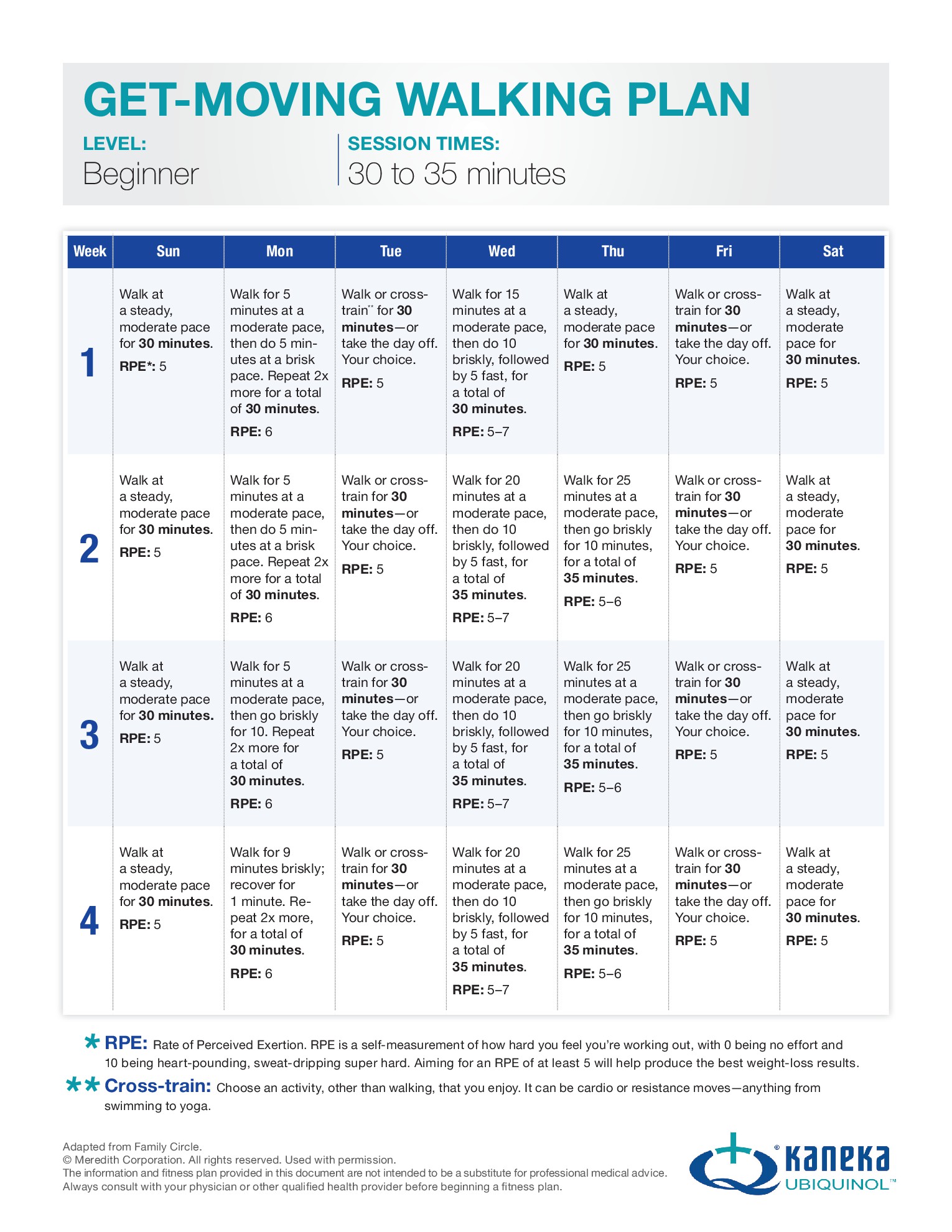
LEVEL: Beginner
SESSION TIMES: 30 to 35 minutes
Week 1
Sunday
Walk at a steady, moderate pace for 30 minutes.
RPE*: 5
Monday
Walk for 5 minutes at a moderate pace, then do 5 minutes at a brisk pace. Repeat 2x more for a total of 30 minutes.
RPE: 6
Tuesday
Walk or cross- train** for 30 minutes—or take the day off. Your choice.
RPE: 5
Wednesday
Walk for 15 minutes at a moderate pace, then do 10 briskly, followed by 5 fast, for a total of 30 minutes.
RPE: 5–7
Thursday
Walk at a steady, moderate pace for 30 minutes.
RPE: 5
Friday
Walk or cross- train for 30 minutes—or take the day off. Your choice.
RPE: 5
Saturday
Walk at a steady, moderate pace for 30 minutes.
RPE: 5
Note: For your convenience, this guide has been converted to be easier to read on mobile. If you would like to view it as an image grid, click here.
Week 2
Sunday
Walk at a steady, moderate pace for 30 minutes.
RPE: 5
Monday
Walk for 5 minutes at a moderate pace, then do 5 minutes at a brisk pace. Repeat 2x more for a total of 30 minutes.
RPE: 6
Tuesday
Walk or cross- train for 30 minutes—or take the day off. Your choice.
RPE: 5
Wednesday
Walk for 20 minutes at a moderate pace, then do 10 briskly, followed by 5 fast, for a total of 35 minutes.
RPE: 5–7
Thursday
Walk for 25 minutes at a moderate pace, then go briskly for 10 minutes, for a total of 35 minutes.
RPE: 5–6
Friday
Walk or cross- train for 30 minutes—or take the day off. Your choice.
RPE: 5
Saturday
Walk at a steady, moderate pace for 30 minutes.
RPE: 5
Week 3
Sunday
Walk at a steady, moderate pace for 30 minutes.
RPE: 5
Monday
Walk for 5 minutes at a moderate pace, then go briskly for 10. Repeat 2x more for a total of 30 minutes.
RPE: 6
Tuesday
Walk or cross- train for 30 minutes—or take the day off. Your choice.
RPE: 5
Wednesday
Walk for 20 minutes at a moderate pace, then do 10 briskly, followed by 5 fast, for a total of 35 minutes.
RPE: 5–7
Thursday
Walk for 25 minutes at a moderate pace, then go briskly for 10 minutes, for a total of 35 minutes.
RPE: 5–6
Friday
Walk or cross- train for 30 minutes—or take the day off. Your choice.
RPE: 5
Saturday
Walk at a steady, moderate pace for 30 minutes.
RPE: 5
Week 4
Sunday
Walk at a steady, moderate pace for 30 minutes.
RPE: 5
Monday
Walk for 9 minutes briskly; recover for 1 minute. Repeat 2x more, for a total of 30 minutes.
RPE: 6
Tuesday
Walk or cross- train for 30 minutes—or take the day off. Your choice.
RPE: 5
Wednesday
Walk for 20 minutes at a moderate pace, then do 10 briskly, followed by 5 fast, for a total of 35 minutes.
RPE: 5–7
Thursday
Walk for 25 minutes at a moderate pace, then go briskly for 10 minutes, for a total of 35 minutes.
RPE: 5–6
Friday
Walk or cross- train for 30 minutes—or take the day off. Your choice.
RPE: 5
Saturday
Walk at a steady, moderate pace for 30 minutes.
RPE: 5
*RPE: Rate of Perceived Exertion. RPE is a self-measurement of how hard you feel you’re working out, with 0 being no effort and 10 being heart-pounding, sweat-dripping super hard. Aiming for an RPE of at least 5 will help produce the best weight-loss results.
**Cross-train: Choose an activity, other than walking, that you enjoy. It can be cardio or resistance moves—anything from swimming to yoga.
Adapted from Family Circle.
© Meredith Corporation. All rights reserved. Used with permission.
*Always consult with your healthcare provider before starting any new exercise program.

Support Your Health Journey
Sign up for our Kaneka Ubiquinol® Newsletter & get tips and resources on cellular wellness, healthy aging, heart health, supplement facts more – delivered right to your inbox.
"*" indicates required fields
You may also be interested in

Diet
6 Ways to Eat More Fiber During the Holidays
Author: Victoria Whittington, RDN; Reviewed by Dietitian Emily Lachtrupp, M.S., RD How we eat during the holidays can be much different than what we normally...

Cellular Health
What Is Mitochondrial Health & How to Maintain It
Think back to your grade school days, when you learned about the mitochondria in science class. That might seem like a distant memory, but mitochondria...

Preconception
Understanding Your Cycle: Tracking Ovulation and the Fertile Window
If you’re focusing on preconception health, you’ve probably started paying closer attention to your reproductive cycle. Maybe you’ve learned information you’ve never thought about before,...