
Buy Ubiquinol Now

Meal Plan Created By: Amanda Kostro Miller
The French are known for their delicious cheese, crusty baguettes, and rich wines. Despite these indulgences, the French tend to have lower rates of coronary heart disease deaths than other countries. 1 Why might this be? Read on to learn the health benefits of the French diet. Then, try it for yourself by downloading our free, seven-day French meal plan menu created by a Registered Dietitian.
Download The Printable Meal Plan
Health Benefits Of French Food
Small Portion Sizes
Compared to American eating habits, the French diet relies on small portions of high-quality foods eaten less often. Across restaurant portion sizes, individual portions in grocery stores, and recommended portion sizes in cookbooks, French portion sizes are significantly smaller than American portion sizes.2 Despite eating less than Americans, the French spend more time at their meals, which helps them feel more satisfied.
High-quality Food
French cuisine requires eaters to enjoy quality over quantity. For example, in our French meal plan, you’ll enjoy 4oz of rich crème brûlée as opposed to several handfuls (or more) of a lesser-quality candy bar or sweet. Eating the good stuff in smaller portions can help curb cravings and make you feel more satisfied.3
“Food Experience”
Traditional French cuisine includes butter, bread, and many other “non-diet” foods. However, in addition to eating smaller portion sizes, the French spend more time eating than their American counterparts. By slowly enjoying the taste and textures of real food, the French end up having more “food experience.” This concept helps the French feel more satisfied by the end of the meal, despite eating less than Americans.4 5
Heart Healthy French Recipes
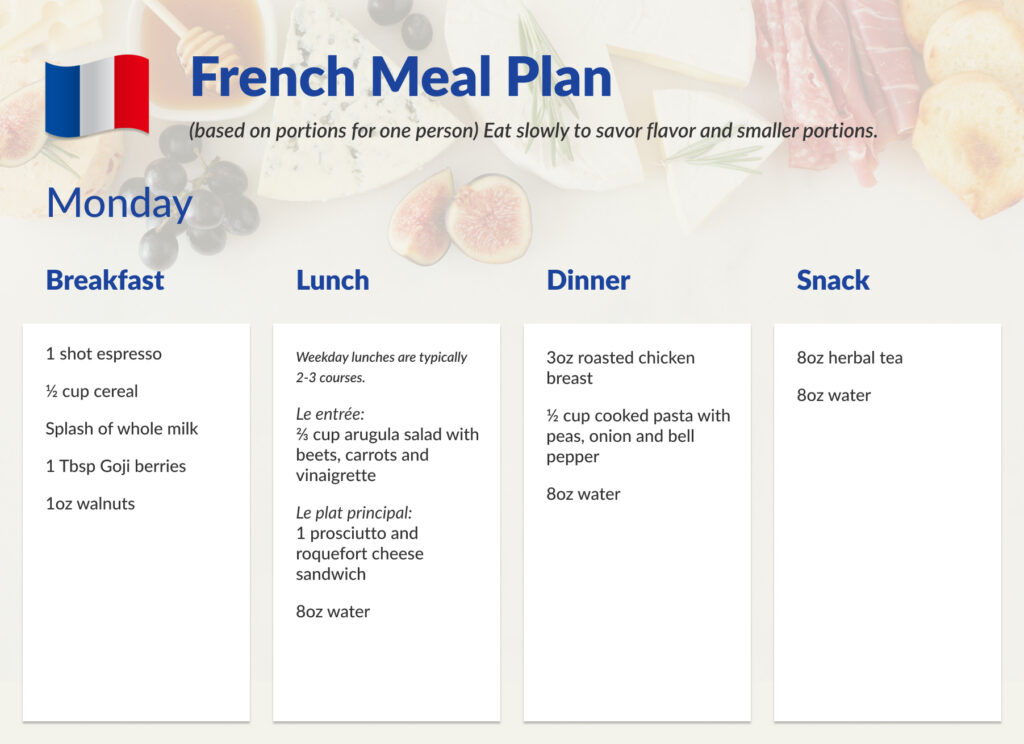
For a practical and flavorful tour of French cuisine, try our free, weeklong French meal plan. From shrimp provencal and traditional French onion soup to ratatouille and French pastries, you’ll enjoy the flavors of one of the great food capitals of the world. To get the true experience, incorporate some French eating habits by slowing down at meals, eating smaller portion sizes, and taking your time to savor each dish.
*A health-promoting diet focuses on a variety of nutrient-dense foods, including vegetables, fruits, whole grains, lean proteins, and healthy fats from nuts and plant oils. Limit intake of both saturated fat and added sugars to less than 10% of your daily calories, and sodium to less than 2,300 mg per day. 2,000 calories a day is used for general nutrition advice, but your calorie and other nutrient needs may vary. For dietary guidance specific to you, consult a healthcare provider.

Support Your Health Journey
Sign up for our Kaneka Ubiquinol® Newsletter & get tips and resources on cellular wellness, healthy aging, heart health, supplement facts more – delivered right to your inbox.
"*" indicates required fields
You may also be interested in

Healthy Aging
Healthy Aging Isn’t Just for Biohackers: Dr. Vuu’s Guide to Aging Well
Social media makes us think healthy aging requires a cold plunge, a red light therapy mask, a cabinet full of peptide stacks, and a robust...

Medication & Supplement Information
3 Myths (and 3 Fun Facts) About Ubiquinol
Noise and marketing around supplements can feel overwhelming, especially with so much information out there. With all the buzz around your supplement stack, many people...

Preconception
Nutrient Density vs. Calorie Counting During Preconception
Reviewed by Amanda Kostro Miller When you start looking into preconception nutrition, so much advice often centers around nutrition and what you’re eating. Often, the...