
Buy Ubiquinol Now

Meal Plan Created By: Amanda Kostro Miller
Ethiopia, located in the Horn of Africa, may boast one of the most unique cuisines in the world. Full of diverse flavors, rich dishes, and the perfect amount of spice, Ethiopian cuisine is packed with delicious and good-for-you ingredients. Learn more about Ethiopian cuisine, and then try it out for yourself by downloading our free, weeklong Ethiopian meal plan created by a Registered Dietitian.
Download The Printable Meal Plan
Health Benefits Of Ethiopian Food
Plant-Based Focus
43% of Ethiopia’s population identifies as Orthodox Christian, while another 35% are Muslim.1 The religious influence in Ethiopian culture has made its mark on the country’s culinary tradition. Since both religions require their followers to abstain from meat for some time of the year, many of Ethiopia’s most well-known dishes are vegetarian or vegan.2 While the cuisine isn’t entirely plant-based, incorporating a variety of vegetables, fruits, whole grains, and other minimally-processed foods into a balanced diet could have various health benefits, including improving lifespan while lowering the risk of coronary disease, high blood pressure, and diabetes.3
High In Fiber
Many Ethiopian staples are high in fiber. For example, injera (a spongy, Ethiopian flatbread) is often used as a utensil to grip food and scoop up stews and sauces. Traditional injera is made out of teff flour, a gluten-free grain native to Ethiopia. Combined with other high-fiber ingredients, like lentils, this cuisine is rich in fiber. High-fiber diets can promote bowel health, help control blood sugar levels, and may provide heart-health benefits like reducing blood pressure and inflammation.4
Rich In Antioxidants
Many Ethiopian herb and spice mixtures, like berbere, are created using antioxidant-rich herbs and spices. Natural antioxidants found in herbs and spices may help reduce oxidative stress, which, when left unchecked, has been linked to an array of diseases, including cancer and cardiovascular issues.5
Heart Healthy Ethiopian Recipes
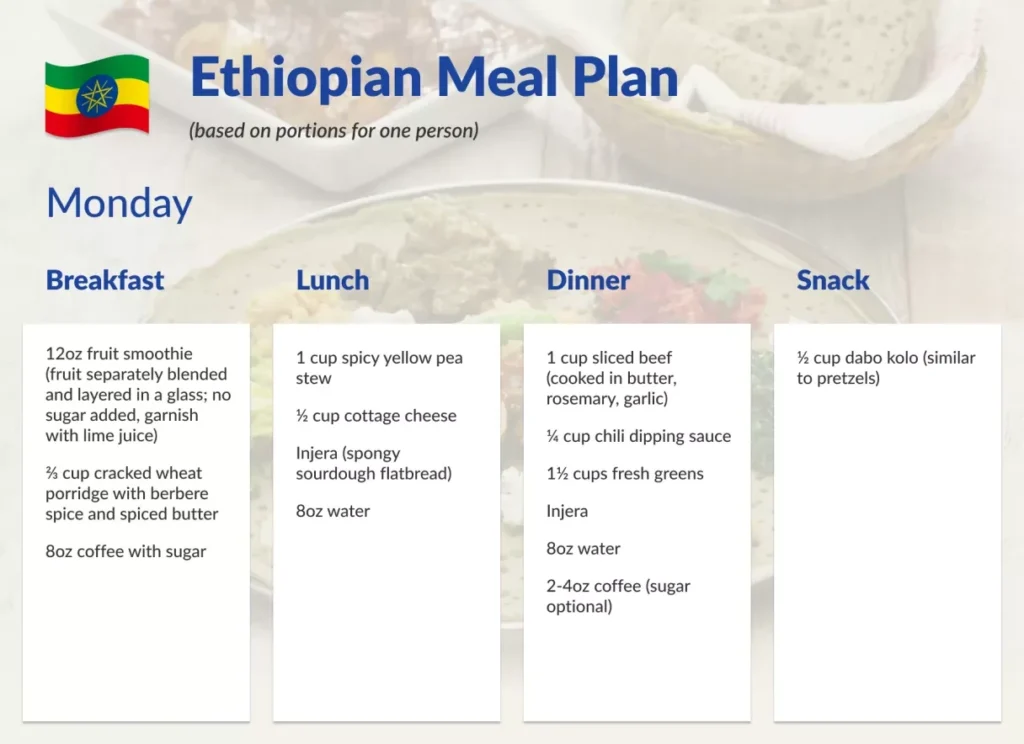
To experience a range of Ethopian flavors and dishes, try our free, 7-day Ethiopian meal plan. From experimenting with spice with hearty chicken or vegetarian stews to embracing vegetarian dishes like gomen, you’ll expand your palate and try something new each day. Of course, don’t forget to try making your own Injera to get the authentic experience!
*A health-promoting diet focuses on a variety of nutrient-dense foods, including vegetables, fruits, whole grains, lean proteins, and healthy fats from nuts and plant oils. Limit intake of both saturated fat and added sugars to less than 10% of your daily calories, and sodium to less than 2,300 mg per day. 2,000 calories a day is used for general nutrition advice, but your calorie and other nutrient needs may vary. For dietary guidance specific to you, consult a healthcare provider.

Support Your Health Journey
Sign up for our Kaneka Ubiquinol® Newsletter & get tips and resources on cellular wellness, healthy aging, heart health, supplement facts more – delivered right to your inbox.
"*" indicates required fields
You may also be interested in

Diet
8 Simple Ways to Hit Your Protein Goals on Busy Days
Author: Christopher Bergland; Medically reviewed by Elizabeth Barnes, RDN Hitting your daily protein targets is best achieved by building small, repeatable habits into your existing...
Diet
How to Add More Greens to Your Meals Without Really Trying
Author: Lauren Thomann Salads are nice, but eventually, they can start to feel repetitive. Fortunately, there are other clever ways to get your daily serving...

Exercise
Can a Workout Really Make Up for Sitting All Day Long?
Author: Jakob Roze, CSCS Between desk jobs, commuting, and screen time, it’s no secret that a large percentage of Americans spend the vast majority of...