
Buy Ubiquinol Now
Diet
Return to Blog
Celebrating Italian Cuisine: Nutrient-Rich Recipes to Savor

Updated on January 8, 2021
Meal Plan Created By: Amanda Kostro Miller
Trying out different cuisines is a great way to expand your palate, simplify your meal planning, and travel the world through food. To help you add variety and adventure into your diet, we’re featuring a different country or region’s cuisine each month of the year. Not only will you learn more about each cuisine’s nutritional benefits, but you’ll also find a free, weeklong meal plan created by a Registered Dietitian.
This month, we’re celebrating a cuisine you already know and love: Italian. You may be surprised to discover that the typical Italian diet is quite different from the pizzas and pastas found at an American Italian restaurant. Italian cuisine is packed with fresh vegetables, lean protein, whole grains, and healthy fats, which work together to provide multiple health benefits. Download our free, one-week Italian meal plan menu and then read on to discover the health benefits of this popular cuisine.
Download The Printable Meal Plan
Health Benefits Of Italian Food
Fresh Fruits and Vegetables
Fresh fruits and vegetables are the cornerstones of the typical Italian diet, and you’ll find tomatoes, garlic, or olives (or all three!) in many traditional meals. In addition to their antioxidant properties, each food offers its own wealth of health properties:1 2 3 4
- Tomatoes may promote heart health, bone health, and healthy blood pressure. Processed tomatoes are known to contain more lycopene, a key antioxidant compound.5
- Olives are a good source of Vitamin E, copper, calcium.6 But, keep in mind that fresh olives may be packed in brine, making them high in sodium.
- Garlic may improve cholesterol levels and reduce blood pressure.7 8
Lean Meats & Proteins
Italian dishes rely on lean meats and proteins. Lean proteins, like chicken, fish, and vegetable proteins, are typically lower in saturated fat. By eating a balanced diet with foods low in saturated fat, you may lower your risk of heart disease.9
Leisurely Meals
In addition to the healthy foods on their plates, Italian eating habits also contribute to a healthier relationship with food. Mealtime is a social ritual, and Italians tend to take their time talking over dinners, lunches, or cups of coffee. In addition to helping you fully enjoy your meal, eating slowly can help you understand when you’re full and ultimately, eat less. It takes about 20 minutes from the time you start eating for your brain to trigger signals of fullness. 10 By eating slowly, you give your brain a chance to register your feelings of fullness, which helps you eat appropriate amounts.
Heart Healthy Italian Recipes
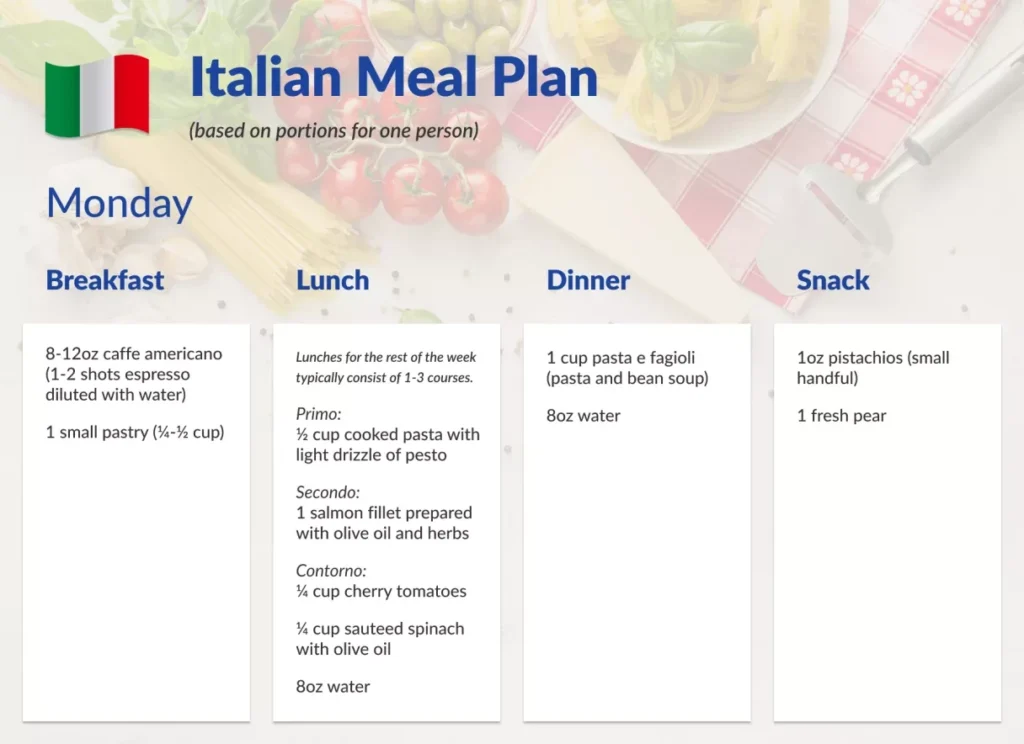
Follow our Italian meal plan for a practical, Italian-inspired week of meals. You’ll use each ingredient in several meals, making it even easier to plan your grocery trip. From hearty pasta e fagioli to mushroom & artichoke fritatas and herb-roasted salmon fillets, you’ll love the fresh flavors and variety of the Italian diet!
*A health-promoting diet focuses on a variety of nutrient-dense foods, including vegetables, fruits, whole grains, lean proteins, and healthy fats from nuts and plant oils. Limit intake of both saturated fat and added sugars to less than 10% of your daily calories, and sodium to less than 2,300 mg per day. 2,000 calories a day is used for general nutrition advice, but your calorie and other nutrient needs may vary. For dietary guidance specific to you, consult a healthcare provider.

Support Your Health Journey
Sign up for our Kaneka Ubiquinol® Newsletter & get tips and resources on cellular wellness, healthy aging, heart health, supplement facts more – delivered right to your inbox.
"*" indicates required fields
You may also be interested in

Healthy Aging
Healthy Aging Isn’t Just for Biohackers: Dr. Vuu’s Guide to Aging Well
Social media makes us think healthy aging requires a cold plunge, a red light therapy mask, a cabinet full of peptide stacks, and a robust...

Medication & Supplement Information
3 Myths (and 3 Fun Facts) About Ubiquinol
Noise and marketing around supplements can feel overwhelming, especially with so much information out there. With all the buzz around your supplement stack, many people...

Preconception
Nutrient Density vs. Calorie Counting During Preconception
Reviewed by Amanda Kostro Miller When you start looking into preconception nutrition, so much advice often centers around nutrition and what you’re eating. Often, the...