
Buy Ubiquinol Now
Diet
Return to Blog
Healthy 3-5 Ingredient Meals: Simple Recipes and a Free Meal Plan

Updated on October 15, 2026
Why Do 3-5 Ingredient Meals Work?
Benefits of Cooking with Fewer Ingredients
Cut Down on Prep Time
Save Money on Groceries
Support Better Nutrition at Home
Your 3-5 Ingredient Meal Plan: A Week of Simple, Healthy Recipes
How to Build a Healthy 3-5 Ingredient Meal
Supporting Wellness with Kaneka Ubiquinol®
Simple Meals, Better Habits: A Healthier Way to Eat
 Meal Plan Created By: Amanda Kostro Miller RD, LDN
Healthy eating doesn’t have to mean complicated recipes or hours in the kitchen. Adding variety to your diet is one of the best ways to support better nutrition, and trying new foods can help you eat a more balanced diet overall. But variety doesn’t have to come at the cost of flavor and simplicity.
There are many ways to make healthy meals with just three to five ingredients. With fewer ingredients, you can cut down on prep and clean-up time while still experiencing the benefits of home-cooked meals. Below, you’ll find the research-backed benefits of cooking with simple and fresh ingredients, plus a free weeklong meal plan created by a Registered Dietitian to help you put it into practice.
Read More: Download the Printable Meal Plan
Why Do 3-5 Ingredient Meals Work?
Simple meals do more than just cut down on time prep and clean up. Research shows they can support better eating habits, lower grocery costs, and less food waste — all while keeping health benefits front and center.
| Benefit | Why It Matters |
|---|---|
| Less prep time | Fewer ingredients means less chopping, measuring, and mixing |
| Lower grocery costs | Shorter shopping lists reduce spending and food waste |
| Better diet quality | Home-cooked meals tend to be more nutritious than prepared or restaurant meals1 |
| Less caloric intake | Research shows home cooks tend to consume fewer calories overall |
| Easier meal planning | Fewer components makes planning and repeating meals simpler |
Benefits of Cooking with Fewer Ingredients
If you’re not used to making your own meals, don’t stress: home cooking does not require culinary experience or hours of free time. In reality, you can put together simple, nutritious meals with just a handful of ingredients and very little time in the kitchen.
Cut Down on Prep Time
We get it: your schedule is busy, and cooking from home feels impossible given the time commitment. Since the 1960s, Americans have steadily shifted toward prepared foods, dining out, and fast food, and time constraints are consistently cited as one of the biggest reasons why. But what if we told you that your limited time is partly a perceived lack of time?
Three-to-five ingredient meals means less chopping, measuring, and mixing — that adds up to saved time on busy weeknights. A shorter ingredient list also means a shorter grocery list, so you’ll spend less time in the store, too. Prepping ahead of time (not right when you’re hungry) can help you make your snacks and meals efficient when it comes time to eat. With the right recipe, you can have a healthy, home-cooked meal on the table in less than 30 minutes.
If you’re juggling a packed schedule, these healthy habits for busy parents offer more ways to make nutritious eating fit your routine.
Save Money on Groceries
Cooking at home with fewer ingredients is one of the most effective ways to cut food spending. People who cook at home tend to spend less on food overall, and limiting each meal to three to five ingredients pushes those savings even further.1
The math backs this up: Forbes found that ordering delivery from a restaurant costs almost five times more, on average, than cooking the same meal at home. Fewer ingredients to buy means less money spent at checkout in the grocery store or even the farmer’s market, and once you’re home, the savings continue. With fewer components in the fridge or pantry, there’s less chance any of it goes to waste, which makes for a more sustainable grocery routine overall.
For more ways to stretch your grocery budget without sacrificing quality, check out these simple steps to healthier grocery shopping.
Support Better Nutrition at Home
Research shows that people who cook at home tend to eat higher-quality food and consume fewer calories overall than those who regularly eat out or rely on prepared meals.2 Cooking at home puts you in control of exactly what goes into your meals and how much of it, which makes it easier to build meals around nutrient-dense whole foods rather than hidden sodium, added sugar, or excess oil. Simple meals make that control even easier to maintain, since there are fewer ingredients competing for attention on your plate.
When you’re building meals at home, a few general guidelines can help:
- Focus on lean or plant-based proteins, vegetables, fruits, whole grains, and healthy fats
- Limit saturated fat and added sugars to less than 10% of daily calories
- Keep sodium under 2,300 mg per day, and under 1,500 mg per day if you have blood pressure or heart conditions
- Be mindful of saturated fats in food, which can negatively impact cholesterol levels
- Limit overly processed foods (such as canned or boxed goods, commercially made premade meals, and pre-seasoned frozen or canned foods)
- Swap out these common ingredients for healthier options
- Have a mix of superfoods and antioxidants in your daily diet
If heart health is one of your specific wellness goals, take a look at our heart-healthy diet essentials and meal plan or our guide to eating more antioxidants for cellular health — both from a Registered Dietitian.
Your 3-5 Ingredient Meal Plan: A Week of Simple, Healthy Recipes
Now you understand that home cooking can be better for your health and your wallet, but where do you start? If you’re looking for simple, healthy recipes you can make at home, we partnered with a Registered Dietitian to create a full week’s worth of breakfasts, lunches, dinners, and snacks. Each is built around no more than five whole-food ingredients.
The plan is designed to be practical, varied, and genuinely satisfying, with a balance of macronutrients across every meal. This means you can eat simply and eat well. From a breakfast casserole to a slow cooker veggie pot pie and everything in between, this meal plan may become your new go-to.
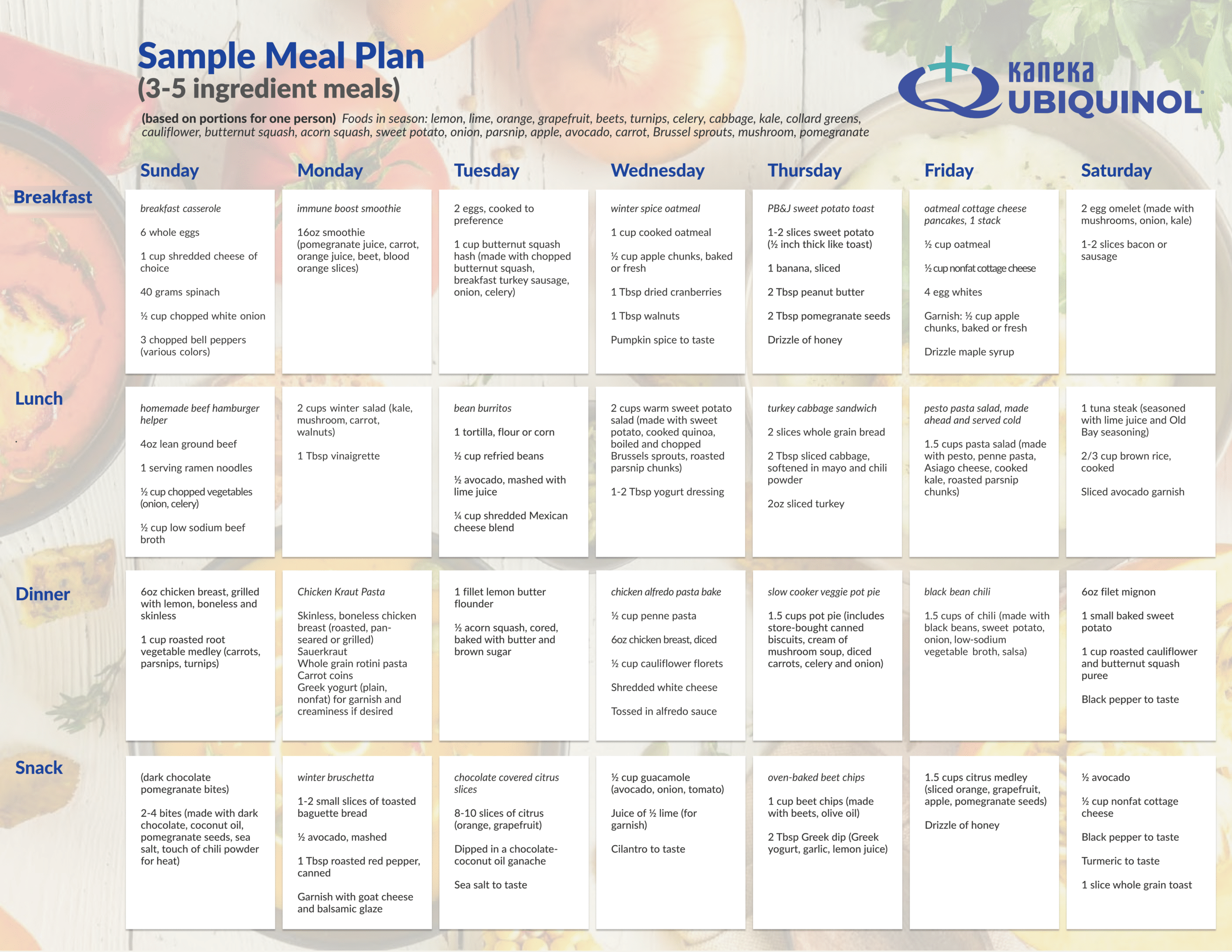
Want more ideas beyond the plan? Browse our full library of healthy recipes or download our free Heart Healthy Dinner cookbook for even more quick, nutritious dinner ideas.
Read More: Download the Printable Meal Plan
How to Build a Healthy 3-5 Ingredient Meal
Once you’ve tried the meal plan, building your own simple meals is easier than it sounds. Start with the basics: a lean or plant-based protein, a non-starchy vegetable, and a whole grain make for a well-rounded meal. Add fruit as a side or dessert, and incorporate small amounts of healthy fat into your cooking process or as a garnish. This mirrors the Healthy Eating Plate model from Harvard’s School of Public Health, which emphasizes balance over complexity.
A few tips to make it work in real life:
- Lean on pantry staples like olive oil, herbs, and spices to add flavor without adding steps
- Keep added salt, lard, and butter to a minimum (all of which contain sodium and/or saturated fat)
- Make healthier swaps to familiar meals to boost nutrition without extra effort
- Batch-cook base ingredients like grains and proteins on the weekend, so weeknight meals come together faster
Need inspiration? Here are a few snacks, meals, and desserts that stick to the 5-ingredients-or-fewer rule:
- Air Fryer Sweet Potato Chips
- Paprika Herb-Rubbed Chicken
- Japanese Cucumber Salad
- No-Bake Vegan Date Brownies
- Strawberry Mango Nice Cream
- Parmesan Cloud Eggs
- Make-Ahead Smoothie Freezer Packs
Supporting Wellness with Kaneka Ubiquinol®
Eating nutrient-dense meals supports your body’s ability to produce energy at the cellular level. But sometimes, even a well-balanced diet isn’t enough to fully meet the body’s nutritional needs, including its need for ubiquinol.
Ubiquinol is one of two forms of CoQ10, and it’s the active, antioxidant form your body uses. It plays a role in mitochondrial ATP production, which supports cellular energy and overall wellness. As we age, the body’s natural ubiquinol levels decline, and foods that naturally contain ubiquinol are not enough to replenish depleted levels of ubiquinol.
Taking a daily Kaneka Ubiquinol® supplement does not replace a healthy diet. It complements a balanced plate as part of a broader approach to mitochondrial health and long-term wellness. Ultimately, eating well is essential to healthy living, but pairing it with smart supplementation choices is key for long-term wellness.
Simple Meals, Better Habits: A Healthier Way to Eat
Who knew just 3-5 ingredients could make healthy eating more approachable, more affordable, and easier to stick with long-term? You don’t need to overhaul your whole diet at once to get started: pick one or two meals from the plan, buy your ingredients, and build from there. You might be surprised at how easy and fun it can be.
Variety still matters for long-term nutrition and balanced eating, so use this meal plan as a starting point, not a strict rulebook. Reframe your idea of cooking in your own kitchen so you can support your diet quality and overall wellness, one meal at a time.
*A health-promoting diet focuses on a variety of nutrient-dense foods, including vegetables, fruits, whole grains, lean proteins, and healthy fats from nuts and plant oils. Limit intake of both saturated fat and added sugars to less than 10% of your daily calories, and sodium to less than 2,300 mg per day. 2,000 calories a day is used for general nutrition advice, but your calorie and other nutrient needs may vary. For dietary guidance specific to you, consult a healthcare provider.

Support Your Health Journey
Sign up for our Kaneka Ubiquinol® Newsletter & get tips and resources on cellular wellness, healthy aging, heart health, supplement facts more – delivered right to your inbox.
"*" indicates required fields
You may also be interested in

Cellular Health
What Is Mitochondrial Health & How to Maintain It
Think back to your grade school days, when you learned about the mitochondria in science class. That might seem like a distant memory, but mitochondria...

Preconception
Understanding Your Cycle: Tracking Ovulation and the Fertile Window
If you’re focusing on preconception health, you’ve probably started paying closer attention to your reproductive cycle. Maybe you’ve learned information you’ve never thought about before,...

Cellular Health
8 Daily Habits That Improve Mitochondrial Health
When thinking about your health and wellness, you might picture your body as a bustling metropolis with you as the mayor. Your organs are like...